
Week 4: Advanced
Scroll down to study the birds by sight and sound, and then take the quiz.
Week 4 Birds
American Coot, Mallard, Canada Goose, Black-capped Chickadee, California Quail, Belted Kingfisher, Ring-billed Gull, California Gull


MALLARD
Bird Code: MALL
Identify this bird by
Large ducks with hefty bodies, rounded heads, and wide, flat bills
Like many “dabbling ducks” the body is long and the tail rides high out of the water, giving a blunt shape
Both sexes have a white-bordered, blue “speculum” patch in the wing
Tell males and females apart by…
Males: Have a dark, iridescent-green head and bright yellow bill. The gray body is sandwiched between a brown breast and black rear
Females & Juveniles: Mottled brown with orange-and-brown bills. Both sexes have a white-bordered, blue “speculum” patch in the wing
Look for…
Behavior - Mallards are “dabbling ducks”—they feed in the water by tipping forward and grazing on underwater plants
Listen for…
Call: The female Mallard gives the quintessential duck quack: often as a series of 2-10 quacks that begin loudly and get softer. The male mallard gives a quieter, rasping one-or two-noted call.
Resources:
AMERICAN COOT
Bird Code: AMCO
Identify this bird by…
A strange member of the Rail family that acts like a duck: a plump bird with a relatively thick neck, rounded head, and sloping bill
Adults are dark gray/black with a white bill. Juveniles are dull gray-brown.
They often bob their head while swimming.
Listen for…
Call: a variety of grunting and croaking noises. They commonly give a short single note “krrp” or “prik” call
Resources:
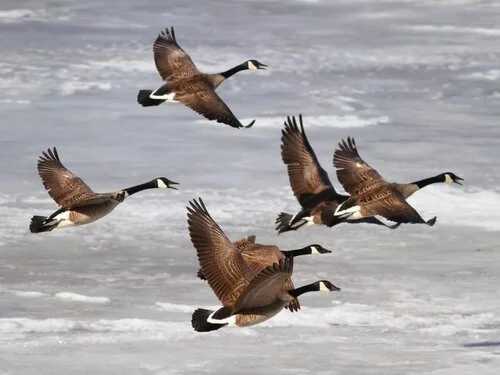


CANADA GOOSE
Bird Code: CANG
Identify this bird by
Big waterbirds with a long neck, large body, wide flat bill
Large webbed feet
Tell it apart by…
Black head with white cheeks and chinstrap
Black neck, tan breast, and brown back
In flight, you can see a prominent white “U” on the upper part of their tail
Look for…
Behavior - feed by dabbling in the water or grazing in fields and large lawns. They are often seen in flight moving in pairs or flocks; flocks often assume a V formation
Listen for…
Call: Various loud honks, barks, and cackles. Also some hisses
Resources:
BLACK-CAPPED CHICKADEE
Bird Code: BCCH
Identify this bird by…
Small, black bill; round body
Full black cap on head; black on chin; white in between
Very active and acrobatic! They hang upside down, even
Males and females look the same
Tell it apart by…
Lack of “angry” eyebrow of the Mountain Chickadee
Sweeter, crisper song and more defined alarm call
Listen for…
Call: Chickadees say their name in a call, “Chick-a-dee-dee-deeeee.” It is believed this is an alarm call to warn of predators. Once you hear one chickadee make this call, you are bound to hear others!
Song: A high-pitched, sweet series of one to two notes that either sound like “hot dog” or “ham-burg-er.”
Resources:


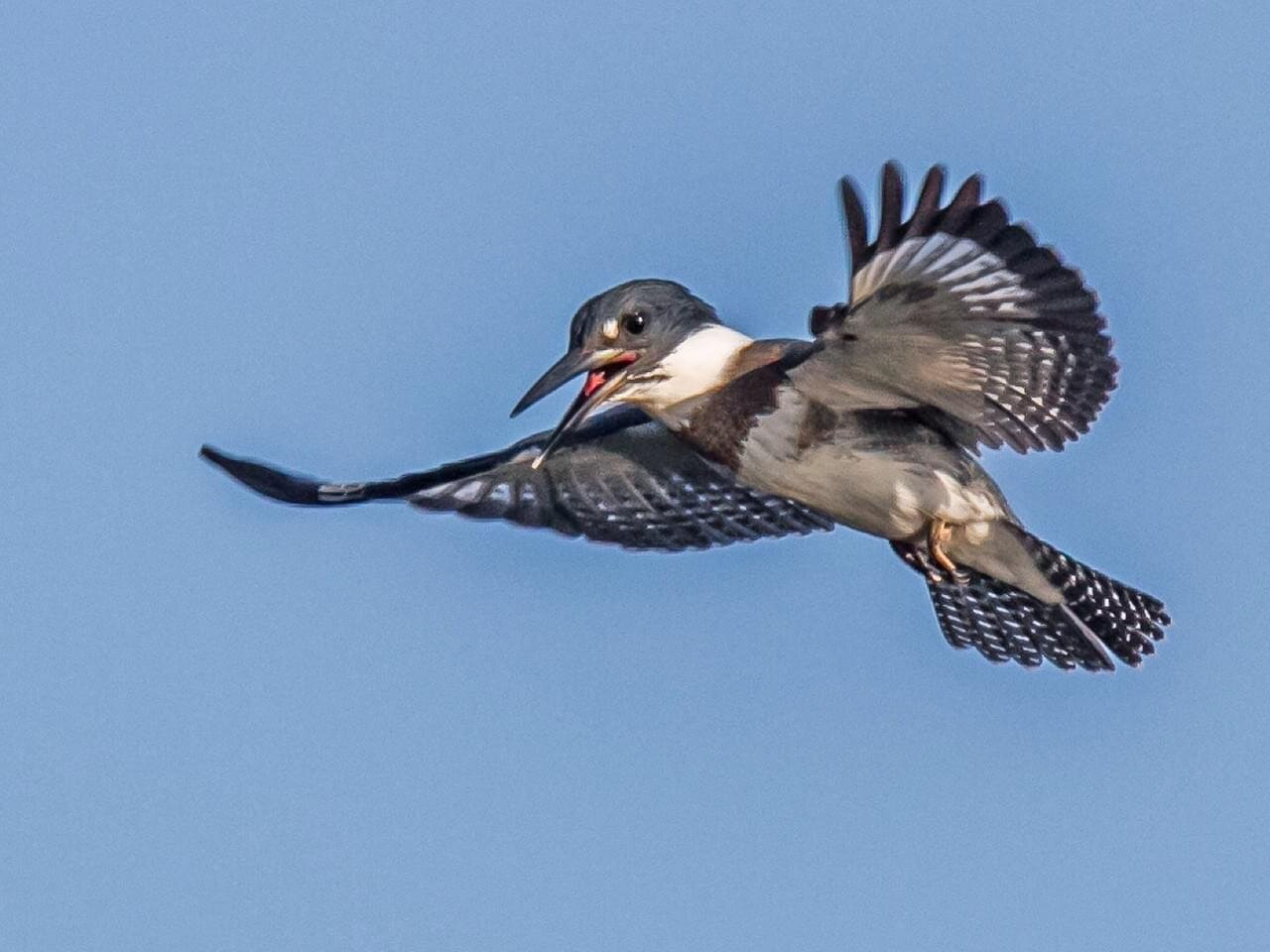


CALIFORNIA QUAIL
Bird Code: CAQU
Identify this bird by…
Plump, short-legged game bird
Scaled black and white belly
Comma-shaped crest (feather on the head)
Tell males and females apart by…
Head markings - Males have noticeable black and white markings on the head, while females do not
Neck - Females are brownish-gray on the neck/chest, while males have a light grey coloration in the same place
Listen for…
Call: Three syllables that sounds like Chi-ca-go. It’s usually given when an individual is separated from its group or mate, as well as while a covey is on the move or preparing to move.
Alarm Call: A repeated pit-pit when danger is near
Resources:
BELTED KINGFISHER
Bird Code: BEKI
Identify this bird by…
Large, stocky bird with big head and big beak
That rock-star mohawk of a crest!
Grayish back, light belly (varies on sex)
Tell males and females apart by…
Females - Chestnut brown belly band and on the flanks
Males - White belly and flacks
Look for…
Habitat - Belted Kingfisher are a riparian species, meaning they are found adjacent to or near water. They are most commonly found along streams, rivers, ponds, lakes, estuaries, and calm marine waters.
Listen for…
Call: A long, uneven, clattering rattle.
Resources:


RING-BILLED GULL
Bird Code: RBGU
Identify this bird by…
A medium-sized white-headed gull with a shorter bill.
Breeding adults have a broad black ring on bill and a pale gray back
Tell it apart by…
Very similar to a California Gull, but breeding adults can be distinguished by the bill (California have a red dot as well as a black stripe), and the color of their back (the gray of the Ring-billed Gull is lighter than the darker California)
Ring-billed Gulls are smaller than California Gulls, but size can be deceiving.
Ring-billed and California Gulls have different calls; Ring-billed calls are higher than California.
Listen for…
Call: Varied. High and hoarse with a scratchy quality.
Resources:


CALIFORNIA GULL
Bird Code: CAGU
Identify this bird by…
Medium-sized gull with a round head
Breeding adult California Gulls are white-headed gulls with a medium gray back, yellow legs, and a dark eye
Non-breeding adults have brown streaking on the head
In their first year, they are mottled brown and white and often have a paler face. The bill is pink with a black tip and the legs are pinkish
Tell it apart by…
The bill is slender compared to other gull species
In flight the wings are long and pointed
Adults have a yellow bill with small black ring and a red spot on the lower mandible
Look for…
Behavior -Strong, nimble fliers and opportunistic foragers; they forage on foot, from the air, and from the water
Listen for…
Call: Give a scratchy, hoarse series of aow notes
Resources:
Feeling ready? Take the quiz!
WEEK 4 WETLAND EXTRAS
Study these birds if you are interested in surveying at Legacy Nature Preserve, the Great Salt Lake Shorelands Preserve, and Utah Lake North Shore.


FORSTER’S TERN
Bird Code: FOTE
Identify this bird by…
Medium-sized tern with pointed wing and a long, forked tail
Flies with shallow wingbeats over marshes and ponds.
Tell it apart by…
Size: Forster’s Terns are much smaller than the Caspian Tern, the other tern found in our study areas,
Differentiate from Caspian Tern by the bill: Forster’s Terns have slender, dark bills for Juv/nonbreeding and an orange bill with a black tip for Adults. Caspian Terns have a thicker orange bill (juv and nonadults) and dark red bill for Adults
Listen for…
Call: a harsh, descending “kyarrr”
Resources:


CASPIAN TERN
Bird Code: CATE
Identify this bird by…
A very large tern (the largest in the world!) with a large red bill and shallow fork in the tail
Breeding adults have dark outer primary feathers and a full black cap
Fly with heavy wing-beats in a gull-like manner
Tell it apart by…
Larger than a Forster’s Tern with a shorter, more shallowly forked tail and a larger red bill
Listen for…
Call: a harsh, heron-like rolling scream
Resources:


FRANKLIN’S GULL
Bird Code: FRGU
Identify this bird by…
A small gull with a short neck and a slim, rather short bill
Like other gulls the wings are long and the tail is short
A white crescent separates the black wingtip from the gray upperwing
Tell it apart by…
Breeding adults have a black head with white crescents above and below the eye
The upperparts are dark gray; the legs and bill are reddish
In non-breeding adults the head has a gray half-hood and the bill and legs are dark
Juveniles are similar to non-breeding adults but browner above, with black tail band and without the wingtip pattern
Look for…
Behavior - Often seen foraging in large flocks
Listen for…
Call: A nasal, upward rising kaaw
Resources:


BLACK-NECKED STILT
Bird Code: BNST
Identify this bird by…
A tall and slender shorebird with a long black bill.
Distinctive plumage with black above, white below, and long pink/red legs
Listen for…
Call: sharp and high-pitched repeated alarm calls, “keek-keek-keek” lower and louder than the American Avocet
Resources: